

What Is Dental Scaling and Root Planing and Why It Matters for Your Gum Health
Posted on by adminIf you have been told you need dental scaling and root planing, you may be wondering what it actually involves. Is it a deep cleaning? Is it painful? And why is it different from a regular dental cleaning? These are very common questions, especially for patients dealing with gum problems for the first time.
Dental scaling and root planing are non-surgical treatments used to manage gum disease and prevent it from worsening. It focuses on cleaning below the gum line, where everyday brushing and flossing cannot reach.
Why Regular Cleanings Are Sometimes Not Enough
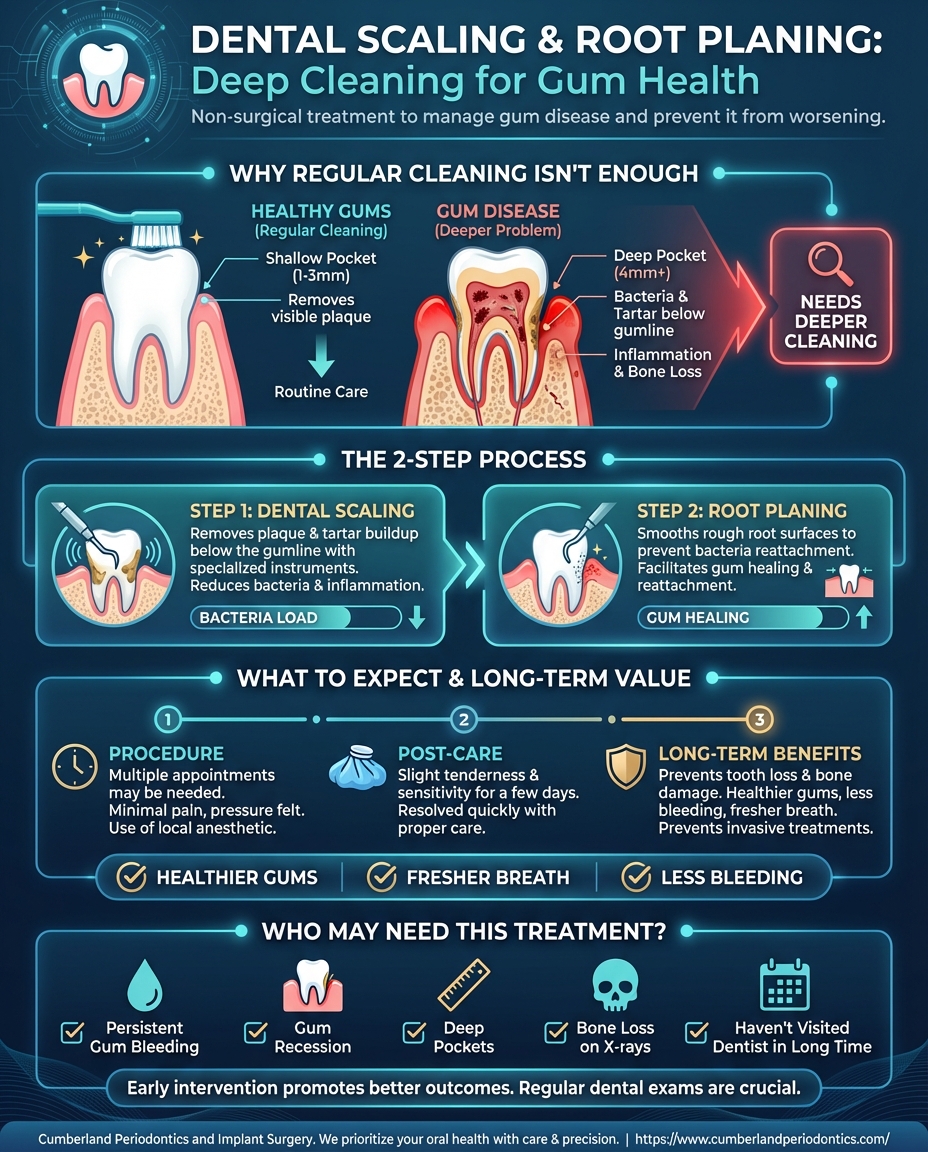
A routine dental cleaning is designed for healthy gums. It removes plaque and tartar from the visible surfaces of the teeth and just along the gum line. But when gum disease develops, bacteria travel deeper and regular cleanings aren’t enough. The gums begin to pull away from the teeth, creating pockets where bacteria continue to grow. This leads to inflammation, bleeding, bad breath, and, over time, bone loss. Dental scaling and root planing are designed to address this deeper problem.
What Dental Scaling Means
Scaling is the process of removing plaque and hardened tartar from the teeth and below the gum line. This buildup cannot be removed with a toothbrush. It requires specialized dental instruments that allow the clinician to carefully clean areas beneath the gums. Removing these deposits with scaling reduces the bacteria in the mouth. This helps soothe inflammation and allows the gums to heal and reattach themselves to the teeth.
What Root Planing Involves
Root planing focuses on smoothing the root surfaces of the teeth. Bacteria tend to stick easily to the irregular surfaces of teeth, which increases irritation. With root planing and even surfaces, the bacteria are less likely to reattach. This stage also facilitates gum healing. With reduced inflammation, the gums can contract around the teeth, minimizing pocket depth and preventing infections from growing.
What to Expect During the Procedure
Dental scaling and root planing sessions can be performed in one appointment or multiple appointments, depending on the stage of gum disease you are in. You may feel pressure during the procedure, but the pain is often minimal. However, it is normal to have slight tenderness and sensitivity after the procedure for a few days. These symptoms go away quickly with the right aftercare.
Why This Treatment Matters Long Term
Untreated periodontal disease grows beyond your gums and can eventually lead to loose teeth, tooth loss, and damage to the supporting bone around the teeth. Dental scaling and root planing help prevent the process from worsening before more invasive treatments are needed. Patients are often surprised at how much better their mouth feels following treatment. Less mouth bleeding, fresher breath, and healthier gums are all noticeable improvements. Routine care promotes healthier results for years.
Who May Need Dental Scaling and Root Planing
Treatment is often recommended for patients with gum disease, such as persistent bleeding, gum recession, deep pockets, and bone loss visible in X-rays. It is also an effective treatment for patients who have not visited a dentist for a long time. Early intervention often promotes better outcomes, which is why regular dental exams are so important.
At Cumberland Periodontics and Implant Surgery, we prioritize your oral health and create treatment plans tailored to you. Our team of experts helps you combat gum disease with care, precision, and comfort, so you can enjoy a healthy, happy smile!